UK Executive Pay in 2026: Policies, Increases and Shareholder Support on the FTSE 350
Subscribe


Key Takeaways
- The competitiveness of UK remuneration remained a key consideration for FTSE 350 companies, with quantum increases emerging as the most prevalent policy amendment during the 2026 UK proxy season.
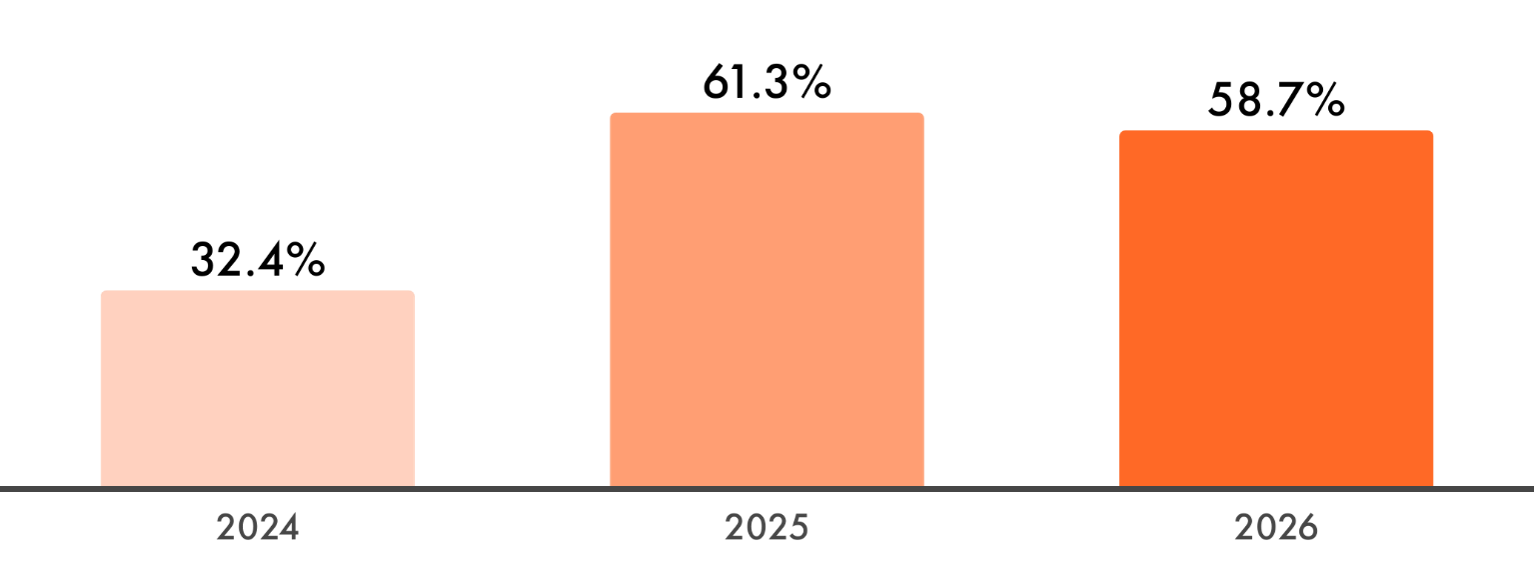
- 58.7% of remuneration policies included proposed increases in quantum. Benchmarking against peers was the most common rationale, cited by approximately two-thirds of companies.
- Eight companies introduced hybrid plans, mainly those operating in sectors where performance can be volatile or cyclical. The rationales for introducing such plans appeared to broaden beyond international competitiveness considerations; however, the majority of these proposals received less than 80% shareholder support.
- There was a notable reduction in the number of remuneration report proposals receiving 20% or more dissent (2026: 10; 2025: 20), and no remuneration report proposal was defeated. The proposals receiving the highest levels of dissent were linked to significant increases in fixed pay, excessive incentive payouts and insufficient responses to previous shareholder concerns.
With the 2026 UK proxy season now completed, this article looks at executive pay for FTSE 350 companies, in terms of shareholder support for remuneration policies, the material updates to those policies and support for remuneration reports.
Shareholder Support for Executive Remuneration Policies
In 2026, 105 FTSE 350 companies put their binding remuneration policies to a shareholder vote (2025: 80; 2024: 71; 2023: 109). The higher number of policies can be attributed to the ongoing, if waning, impact of the triennial policy cycle beginning in 2014,1 in addition to 14 companies bringing their policies forward ahead of schedule to seek approval for material changes to their executive remuneration arrangements.
Shareholder support remained strong, with policies receiving average support of 92.8%, slightly above 91.9% in 2025. As shown in Figure 1, no proposals were defeated, 81.9% of policies received at least 90% support, and only 9.5% received more than 20% opposition. As in previous years, dissent was largely linked to significant increases in quantum or the introduction of hybrid incentive plans. By contrast, the strongest levels of shareholder support were generally received by proposals involving modest, well-rationalized quantum increases and minor changes in line with market best practice.
Figure 1. 2026 FTSE 350 Shareholder Support for Remuneration Policies

Source: Glass Lewis Research.
Material Updates to Common Executive Remuneration Policies
Of the companies that submitted proposals in 2026, approximately 85% proposed a material update to their policy compared to 81% in 2025. As shown below (Figure 2), quantum increases remained the most common change, with 61 companies proposing an increase, up from 49 in 2025. Increases to shareholding guidelines were also prominent, often to maintain alignment with increased incentive opportunity.
The relaxation of bonus deferral arrangements, which has emerged as a trend over the past couple of years, also continued in 2026. Other notable changes included adjustments to payout and vesting schedules (e.g., changes to payout levels for threshold performance) and updates to non-executive director (NED) fee arrangements, particularly the introduction of the flexibility to pay a portion of fees in shares, in line with the Investment Association’s guidance.2
Figure 2. 2026 FTSE 350 Breakdown of Material Changes in Remuneration Policies

Source: Glass Lewis Research. Note: Changes denoted as Other include, but are not limited to, the removal of salary and benefit caps, the introduction or removal of a multiplier, the introduction of market value share options, and the flexibility to make sign-on awards.
Explaining Quantum Increases
While the rationale provided for quantum increases varied, as in 2025, benchmarking against peers remained the most common rationale, cited by approximately 67% of companies. Other key considerations flagged by companies included the need to attract and retain executives, strengthening the alignment between pay and performance and reflecting increases in company size and complexity. Competition with the United States and in global markets was cited by a relatively smaller proportion of companies (approximately 20%), although this represented an increase from 11% in 2025.
Reflecting increased shareholder expectations around disclosure of the benchmarking process, most companies proposing higher quantum provided information on the peer groups used for benchmarking. However, naming specific companies as peers remains a relatively uncommon practice.
Figure 3. 2024 - 2026 FTSE 350 Companies Proposing Quantum Increases
Source: Glass Lewis Research.
As shown in Figure 4 below, there was also a notable shift in how quantum increases were delivered in 2026, with a much greater proportion of FTSE 350 companies increasing long-term incentive (LTI) opportunities and far fewer increasing short-term incentive (STI) opportunities only, reflecting a greater emphasis on long-term value creation.
Figure 4. 2025 - 2026 FTSE 350 Quantum Increases in Executive Pay by Plan

Source: Glass Lewis Research.
Proposing Hybrid Incentive Plans
In 2026, eight FTSE 350 companies proposed the introduction of hybrid plans; i.e., plans combining restricted shares with performance shares (2025: 10; 2024: 6). These plans were introduced mainly by companies operating in sectors where performance can be volatile or cyclical, such as media and advertising, real estate and consumer discretionary. Notably, a number of these companies did not cite strong international or U.S. competitiveness considerations as a rationale, suggesting that the case for combining restricted and performance shares may be broadening beyond competitiveness considerations.
While a number of the companies proposing hybrid plans provided compelling strategic rationales for their introduction, and adopted structures broadly aligned with Investment Association guidance, the majority of proposals incorporating restricted and performance shares received shareholder support below 80%, as shown below, which may indicate that some shareholders remain cautious about the introduction of these types of plans.
Figure 5. 2026 FTSE 350 Shareholder Support for Companies With a Hybrid Incentive Plan

Source: Glass Lewis Research.
Shareholder Support for Remuneration Reports
Average shareholder support for remuneration report proposals increased modestly in 2026, to 95.1% (2025: 93.4%; 2024: 94.2%), with 88.7% of reports receiving between 90-100% support (Figure 6). There was also a notable reduction in the number of proposals receiving significant opposition (20% or more), falling from 20 in 2025 to 10 this year. Additionally, no remuneration report proposals were defeated in 2026, compared with three in the previous year.
Figure 6. 2026 FTSE 350 Shareholder Support for Remuneration Reports

Source: Glass Lewis Research.
The proposals that received the highest dissent were generally those linked to significant increases in fixed pay and excessive incentive payouts, as well as, in some cases, an insufficient response to previous shareholder concerns. However, overall voting outcomes suggest that shareholders were broadly supportive of the remuneration decisions taken by FTSE 350 remuneration committees.
Base Salary Increases Remain Largely Unchanged
The number of executives receiving significant base salary increases (5% or above) was largely unchanged year-on-year (85 in 2026 vs 86 in 2025). However, there was a modest increase in the proportion of FTSE 350 companies where the average executive salary increase outpaced that of the wider workforce, rising from 22% in 2025 to 28% in 2026.
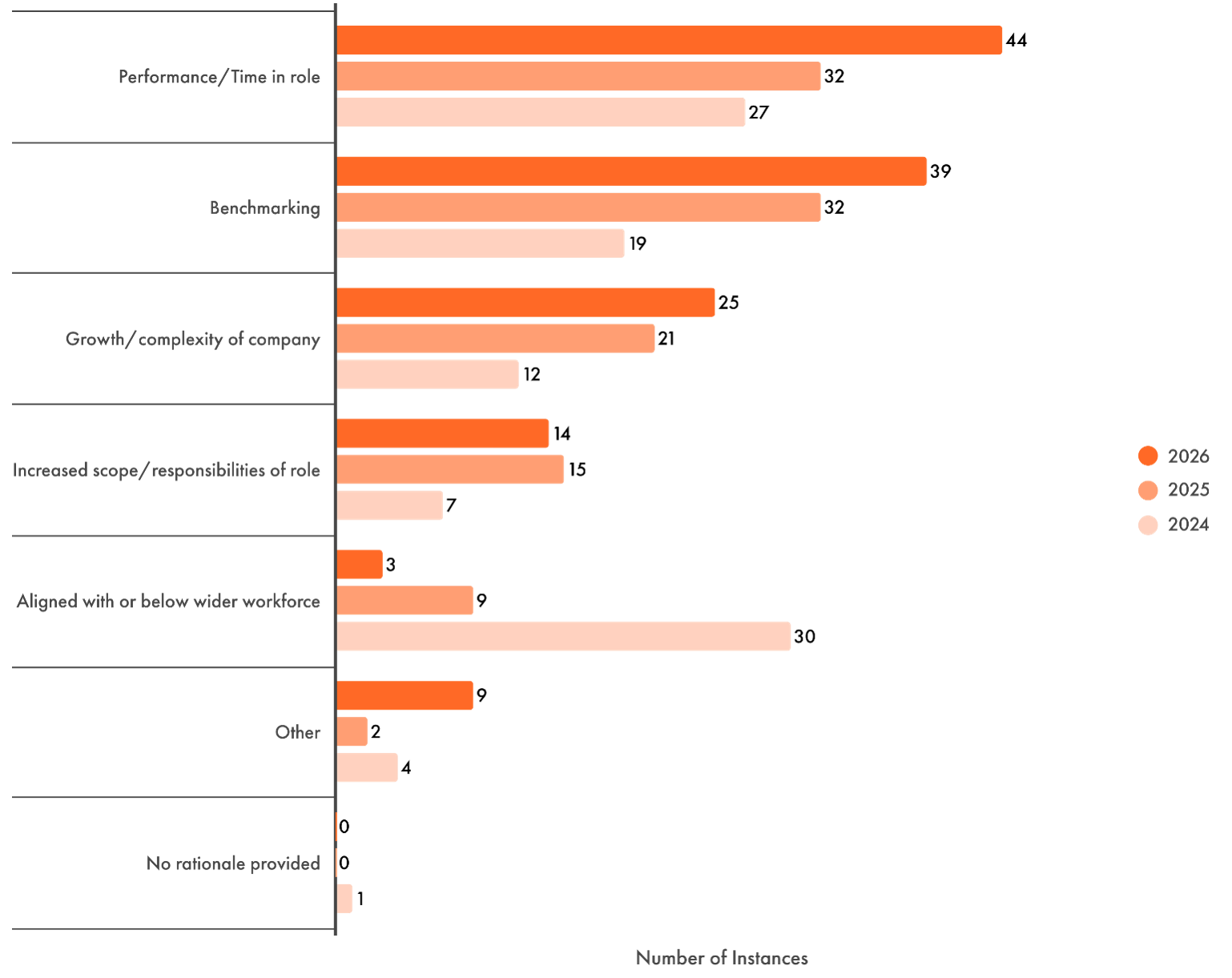
A breakdown of the rationales for significant salary increases is outlined in Figure 7 below. While the incidence of significant increases remained broadly unchanged, the considerations disclosed in 2026 point to a greater emphasis on rewarding executives for their performance and time spent in the role, as well as benchmarking against peers, mirroring the considerations provided in relation to quantum increases. By comparison, fewer companies cited alignment with the wider workforce.
Figure 7. 2026 FTSE 350 Rationales for Significant Executive Salary Increases
Source: Glass Lewis Research.
Overall, salary increases remained well contextualized, with the number of negative voting recommendations on this basis unchanged at four compared to last year.
On October 13, 2026, Glass Lewis’ Europe and UK Research team will hold a webinar reflecting on the key governance, voting and market developments that shaped the 2026 proxy season, and highlight insights from our Proxy Season Review reports. Sign up to participate.
Notes and References
1 This binding policy framework in the UK took effect for financial years beginning on or after October 1, 2013, with the first major wave of mandatory votes rolling out at 2014 annual general meetings. Policies must be put to a vote triennially, when a policy is materially amended, or when an advisory remuneration report proposal does not receive majority shareholder approval. While many companies have continued to put their policy up to vote on the same cadence, some have moved to a different triennial cadence due to policy updates or rejected advisory votes.
2 The Investment Association. “Investors confirm 2026 executive pay guidelines.” November 13, 2025. https://www.theia.org/news/press-releases/investors-confirm-2026-executive-pay-guidelines.