Vote Disclosure
Vote Disclosure Services Tailored for Investor Needs
Demonstrate Transparency by Sharing Your Proxy Voting Practices with Stakeholders
Amid growing expectations for transparency, investors are seeking help to efficiently share their voting data with stakeholders. Glass Lewis’ Vote Disclosure service provides a dynamic dashboard that pulls voting data from Viewpoint to support stewardship reporting and fulfill client mandates.
Key Features and Benefits

Comprehensive Voting Insights
With voting results updated daily, Vote Disclosure enables your firm to share deeper insights about its voting record, Share insights into voting activities with summary statistics on eligible and voted meetings by region, company, meeting data and proposal type.

Interactive and Branded Display
Visualize up to three years of Viewpoint voting data with interactive charts, tables and graphs, providing stakeholders with relevant insights into your voting practices. Showcase data on a website branded with your logo and colors for a professional, engaging experience.

Comply with Stewardship Disclosure Standards
Our Vote Disclosure reporting service currently support clients in meeting best practice standards for active owners including:
- United Nations Principles of Responsible Investment (UNPRI)
- Australian Government Stronger Super
- FSC Standards No.13 and No.20
- UK Stewardship Code
- Japan Stewardship Code
- Swiss Stewardship Code

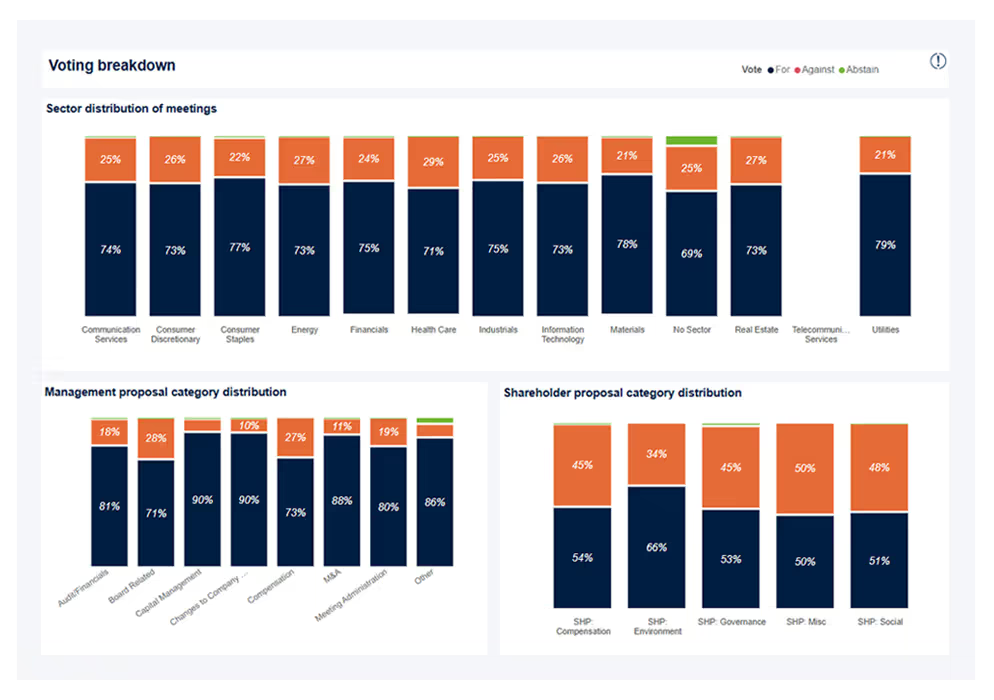

Public Disclosure Tailored to Your Needs
The dashboard displays summary statistics on eligible and voted meetings. Seamlessly navigate accounts, meetings, votes, and rationales displayed at your preferred intervals.


Bank CEO Pay on the S&P 500: How One-Time Awards Impact Compensation and Benchmarking
This article examines the growing use and value of one-time awards in the banking sector, their effect on reported CEO compensation, and how they impact peer benchmarking.
Bank CEO Pay on the S&P 500: How One-Time Awards Impact Compensation and Benchmarking
This article examines the growing use and value of one-time awards in the banking sector, their effect on reported CEO compensation, and how they impact peer benchmarking.

The DEXIT to Texas: US Reincorporation in 2026
This article examines what drove U.S. company reincorporations in 2026, and how shareholders are approaching these moves.
The DEXIT to Texas: US Reincorporation in 2026
This article examines what drove U.S. company reincorporations in 2026, and how shareholders are approaching these moves.