Assessing Skills and Experience on US Boards: Common Core and Sector-Specific Skillsets on the Russell Top 200
Subscribe



Key Takeaways
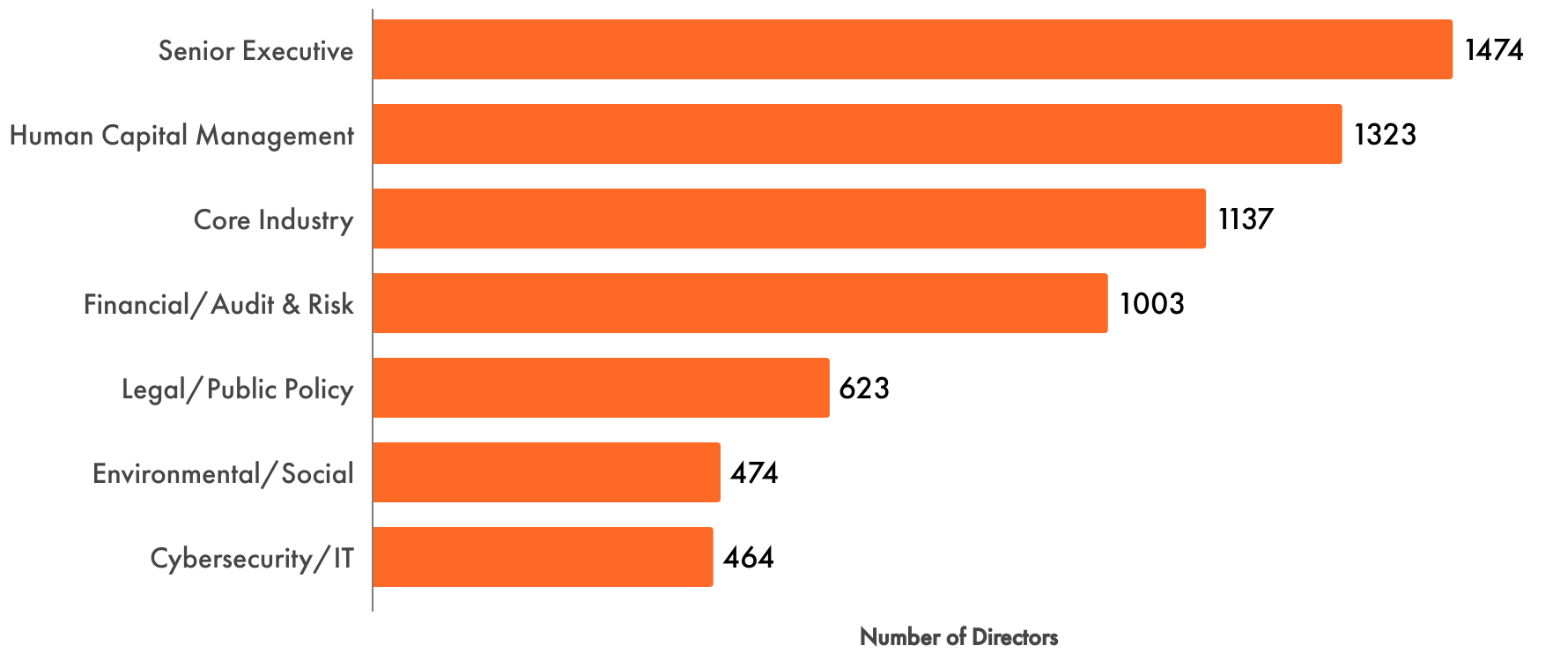
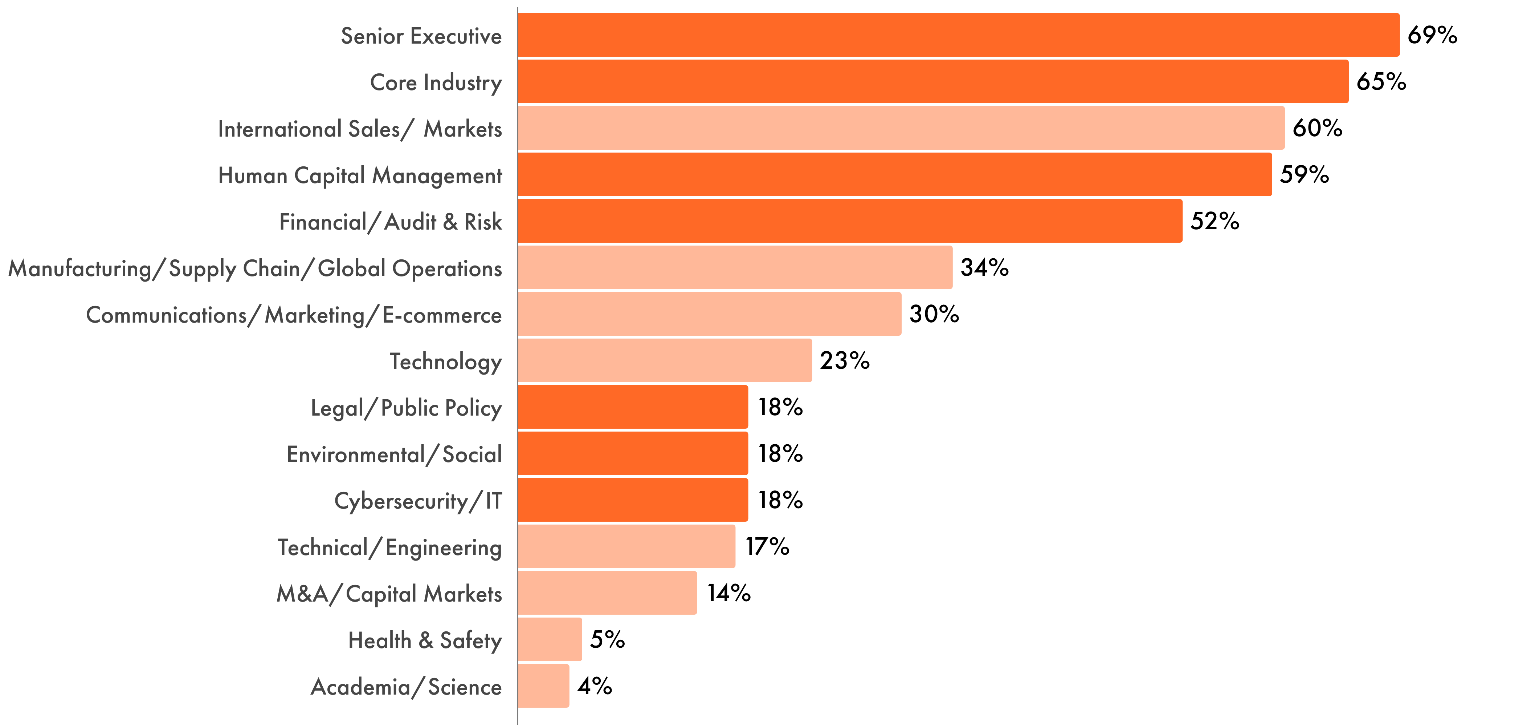
- Senior executive experience continues to be the most sought-after director criteria for U.S. boards, followed by experience with human capital management, core industry, and financial/audit and risk.
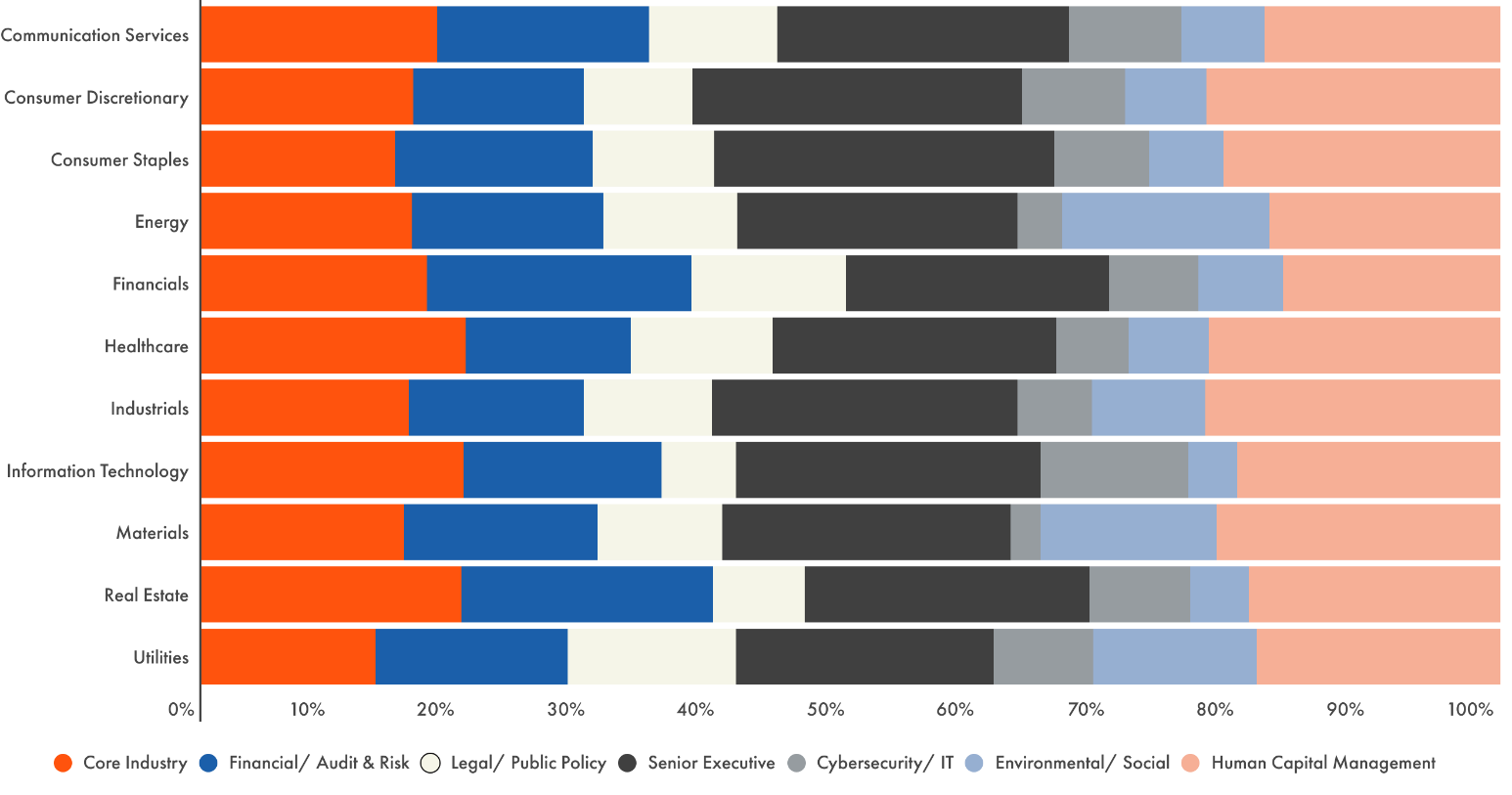
- Highly regulated sectors including utilities, financials, and energy are more likely to include directors with expertise in legal and public policy.
- Directors with experience relating to environmental and social issues made up 50% or more of newly appointed directors at companies in carbon intensive sectors such as energy, materials, and utilities.
- The financials, healthcare, and information technology sectors saw the highest concentration of newly appointed directors with backgrounds in cybersecurity/IT, possibly reflecting these sectors’ risk exposure to cyber incidents or AI-technologies.
Board composition is a significant area of investor interest, and ensuring an appropriate mix of skills and experience continues to become more relevant to director voting decisions in the U.S. market. Glass Lewis Research helps investor clients identify any potential skills gaps by including an assessment of board skills and experience in our Proxy Paper reports.1 This article provides an overview of findings from 2025 proxy statement disclosures, covering companies in the Russell Top 200 Index.
Most Common Director Skills
The primary responsibilities of the board include oversight of management and risk, in addition to providing guidance on business strategy. As such, it’s unsurprising that senior executive experience continues to be the most sought-after director criteria (Figure 1), as directors with this background are often equipped with pertinent expertise relating to companies’ operations, strategies, and the needs of management. In addition, human capital management, core industry, and financial/audit and risk are also prevalent director skills. They are essential to fulfilling fundamental director responsibilities and ensuring effective board oversight of key areas including operations, financial reporting, and risk, among others.
Figure 1. Most Common Core Skills by Number of Directors, Russell Top 200
Source: Glass Lewis Research. Note: Data covers 11 market sectors. See the Board Skills Appendix – North America for further details.
Comparably, while fewer directors have legal/public policy, environmental/social, and cybersecurity/IT skills, directors with these backgrounds provide for well-rounded boards and bolster board oversight and navigation of material risks in these areas.
Companies often seek out directors to strengthen areas where their businesses are exposed to the most risk. As such, some boards may have a higher concentration of directors with these backgrounds and skillsets than others, depending on their sectors and risk profiles. For example, highly regulated sectors including utilities, financials, and energy are more likely to include directors with expertise in legal and public policy, while carbon intensive sectors including industrials, energy, materials, and utilities generally have a higher concentration of directors with experience in environmental and social issues.
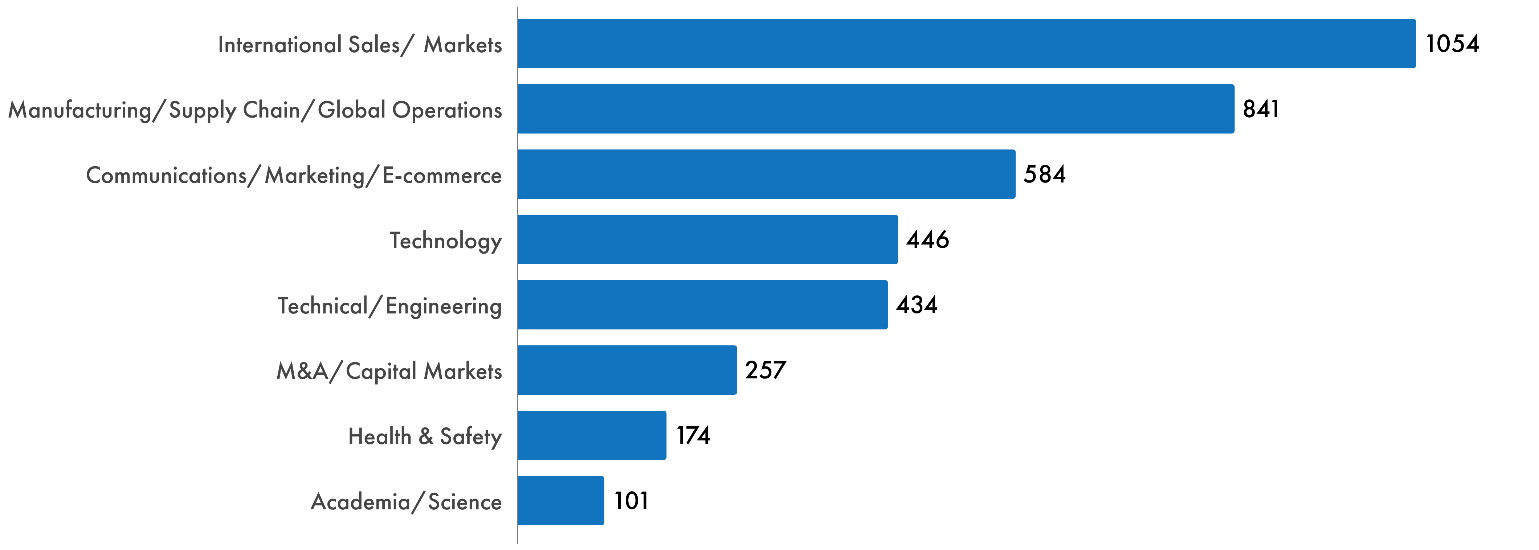
Primarily due to the global nature of most large companies, international sales and markets experience remains a top sector-specific skill (Figure 2). In addition, experience in manufacturing/supply chain/global operations similarly remains a prevalent sector-specific skill that is widely distributed across all sectors. While not core skills, many senior executives at global companies have experience working across international markets and global operations, contributing to the high concentration of directors with these sector-specific skills.
Figure 2. Most Common Sector-Specific Skills by Number of Directors, Russell Top 200
Source: Glass Lewis Research. Note: Data covers 11 market sectors. See the Board Skills Appendix – North America for further details.
Sector-specific skills such as M&A/capital markets, health and safety, and academia/science represent specialized skillsets and backgrounds that are only relevant to a smaller sub-set of companies. Academia/science is the least common sector-specific skill, however, companies in the healthcare and materials sectors often seek out directors with advanced degrees such as PhDs and specialized knowledge that is critical for effective oversight and guidance on strategy to companies in these sectors.
Sector by Sector Comparison
Core industry experience is relevant across all sectors; however, certain sectors appear to prioritize core industry experience more than others (Figure 3). This may indicate that certain sectors require more directors with direct industry experience to fully understand their businesses and the challenges they face, while other sectors may benefit from directors with more general experience and broader market knowledge.
Figure 3. Breakdown of Core Skills by Sector, Russell Top 200
Source: Glass Lewis Research. Note: Data covers 11 market sectors. See the Board Skills Appendix – North America for further details.
Companies in sectors with significant exposure to environmental risks such as the energy, materials, and utilities sectors continue to be more likely to include directors with environmental/social skills, given the need for boards and directors at these companies to better understand and mitigate the environmental risks and challenges their businesses face.
In contrast, directors with cybersecurity/IT skills and experience are underrepresented at companies in the energy and materials sectors, relative to companies in other sectors. Companies in the financials, consumer staples, consumer discretionary, utilities, communications services, and information technology sectors all have at least 20% of their directors with cybersecurity/IT skills and experience, while materials and energy sector companies have just 7.7% and 11.8%, respectively, of their directors with these skills and experience.
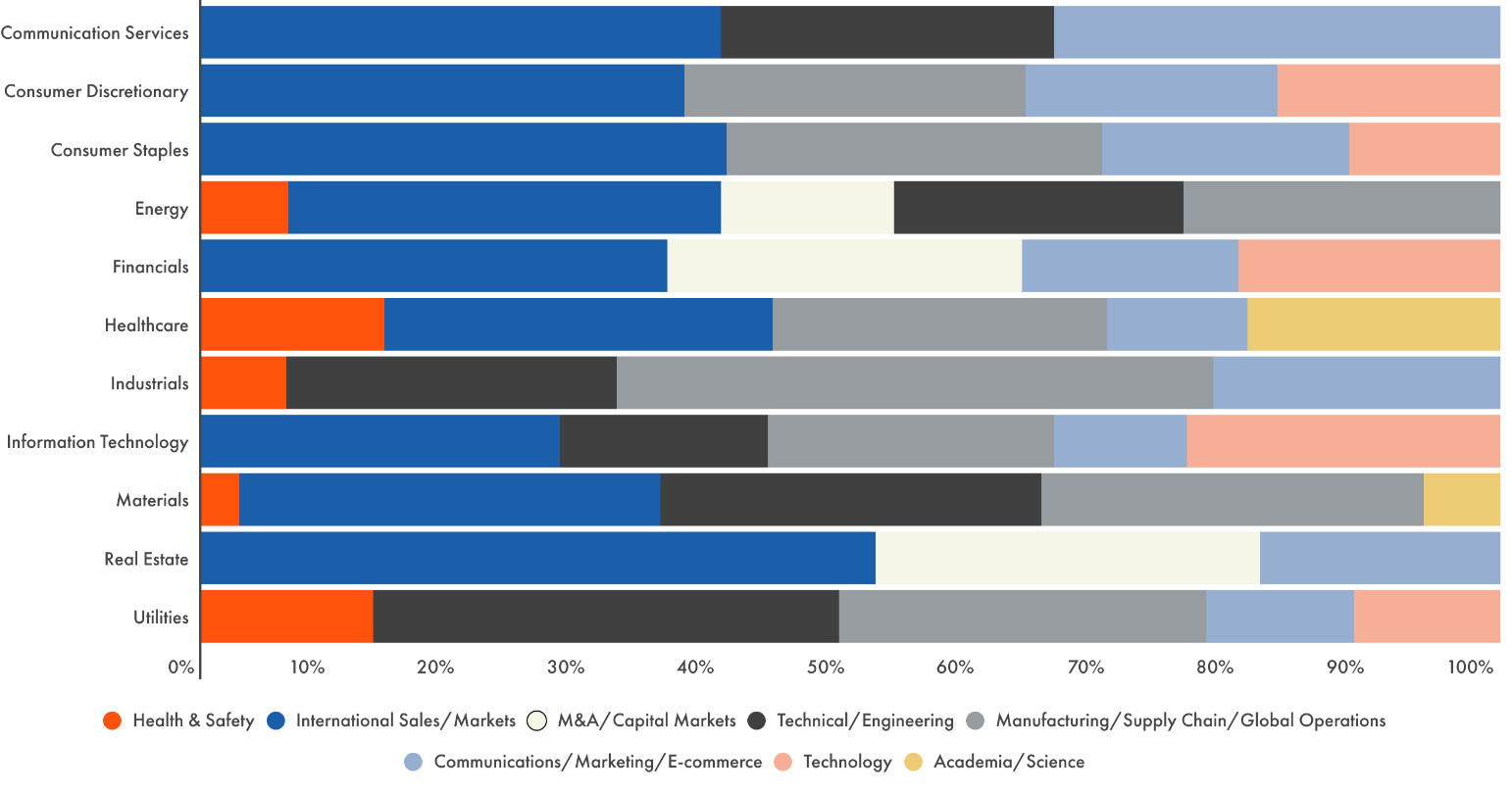
The concentration of sector-specific skills (Figure 4) generally reflects companies’ risk profiles and operations, with companies often prioritizing the appointment of directors that best address such considerations. Technical/engineering is a widely held skill in sectors such as communication services, energy, industrials, information technology, materials, and utilities, which are heavily dependent on technical/engineering skills to develop and maintain complex operation systems and infrastructure.
Figure 4. Breakdown of Sector-Specific Skills by Sector, Russell Top 200
Source: Glass Lewis Research. Note: Data covers 11 market sectors. See the Board Skills Appendix – North America for further details.
Technology also appears to be widely held among sectors including consumer discretionary, consumer staples, financials, information technology, and utilities, where technology is increasingly integrated into companies’ processes and products. Consumer facing sectors such as communications services, consumer discretionary, and consumer staples tend to have more directors with communications/marketing/e-commerce skills where boards must oversee and provide guidance to management on their strategies and approach to dynamic consumer preferences.
Skillset of Newly Appointed Directors
Among newly appointed directors, the most common skills are nearly identical to those of the overall pool of Russell Top 200 Index directors, with senior executive experience, core industry, international sales/markets, human capital management, and financial/audit and risk as the top five skills for both groups. Notably, ten of the eleven sectors appointed directors with environmental/social experience during the past year, and nine of the eleven sectors appointed directors with cybersecurity/IT experience, as well as legal/public policy.
Figure 5. Skill Profile of Newly Appointed Directors, Russell Top 200
Source: Glass Lewis Research. Note: Data covers 11 market sectors. See the Board Skills Appendix – North America for further details.
In addition, financials, healthcare, and information technology sectors saw the highest concentration of newly appointed directors with backgrounds in cybersecurity/IT, possibly reflecting these sectors’ risk exposure to cyber incidents or AI-technologies. Meanwhile, directors with experience relating to environmental and social issues made up 50% or more of the newly appointed directors at carbon intensive sectors such as energy, materials, and utilities. Notably, the industrials and materials sectors saw the highest concentration of newly appointed directors with experience in manufacturing/supply chain/global operations, potentially as a result of these sectors’ exposure to geopolitical risk and trade tariffs.
Looking Ahead
Board composition will continue to be guided by companies’ most prevalent risk environments and complex issues, with the concentration of certain skills varying company to company based on sector. However, a well-balanced board of directors consisting of a variety of experiences, skills and tenure is generally best equipped to provide oversight, mitigate risk, and effectively advise management on critical strategic decisions to support long-term shareholder value.
Board refreshment and mitigation of skills gaps remain top of mind for investors, with shareholders looking to companies to perform regular evaluation of directors’ skills and risk management frameworks. As such, companies are increasingly adopting guidelines and using assessments to facilitate strategic refreshment, with tools such as skills matrices, director self-assessment, third-party assessments, and annual evaluations providing insight into where further focus is needed and guiding the director nomination and succession planning processes. In addition to more common or “core” skills, boards may look to strengthen their oversight in emergent issues and consider candidates with expertise in areas such as AI governance, geopolitical risk, or environmental/social risk.
Glass Lewis clients can access our full Board Skills Findings report, which includes additional data and analysis, on Viewpoint, our research portal and Governance Hub.
Notes and References
1 For additional details regarding the methodology and this approach to board skills, please refer to Glass Lewis Board Skills Appendix – North America. 2025. Glass Lewis. https://resources.glasslewis.com/hubfs/Supplementary%20Guidance/Board%20Skills%20Appendix%20United%20States.pdf