

Introducing Climate Intelligence: Next-Generation Climate Research for Institutional Investors
Subscribe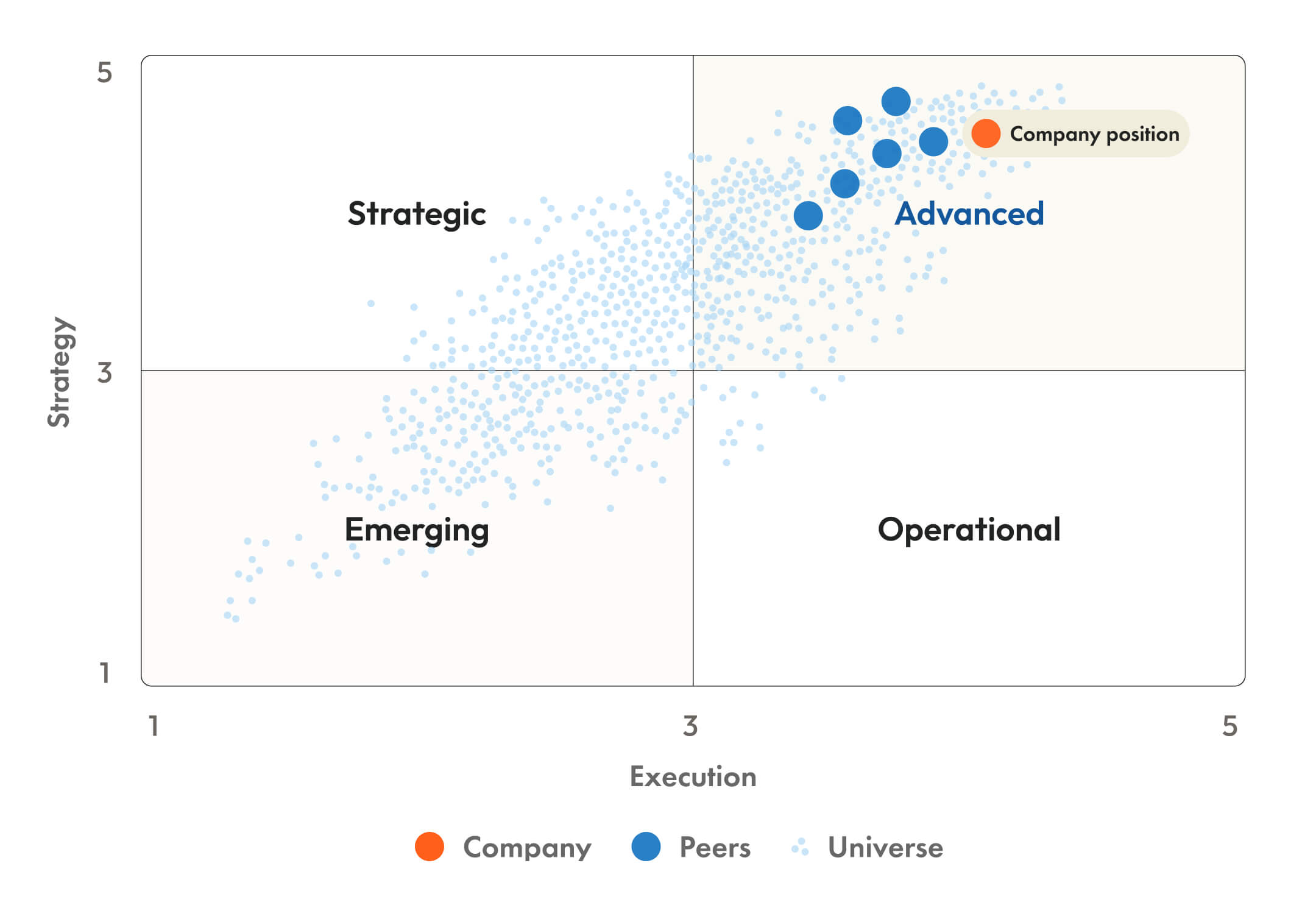



Key Takeaways
- Climate Intelligence analyses systemic transition risks and opportunities at the level of a company’s actual business portfolio.
- We separate strategy from execution, assessing whether transition plans are credible, feasible and investable.
- Transition exposure is linked to the decisions that drive growth, margins, capital allocation and long-term value.
- The research workflow pairs expert oversight with tightly governed AI to deliver consistent, evidence-backed insights at scale.
Institutional investors turn to Glass Lewis for systematic analysis on the companies they hold. By reviewing performance across a range of topics and key business matters, we provide a critical bridge between shareholder interests and company management over time. As the transition to a lower carbon emissions economy increasingly shapes value creation, investors need that same quality of judgement applied to climate transition dynamics.
Today, we are introducing Climate Intelligence: a research product to help investors connect transition-driven1 economic pressures to investment analysis, portfolio construction and engagement. Investors already have data about company emissions, disclosures and scenario analysis. The more difficult task is translating abundant climate data into financially meaningful insights and investment-relevant signals.
In previous articles, we explored the need for financial signals,2 why current climate signals often fall short of investor needs,3 and why strategy and execution offer a more useful lens4 for understanding a company’s context.
Climate Intelligence is designed to close that gap. It does not seek to reduce transition uncertainty to a single quantitative output or a false sense of precision. Instead, it helps investors form disciplined judgements about company strengths, weaknesses, and positioning as transition conditions evolve.
Why We’re Launching Climate Intelligence Now
Two developments make this more pressing.
First, expectations for investment research have changed. Broad sustainability narratives carry less weight than they used to. Investors increasingly want to know how climate change may alter the economic position of individual companies, and how management’s decisions may shape business performance.
Second, research capabilities have expanded with the rapid advances in artificial intelligence (AI). It is now possible to process data at greater depth through advancements in natural language processing. But as the technology is becoming more widely used, confidence in the information it generates may weaken. In the age of AI, investors still need research that is human-centric,5 consistent across companies and transparent in how conclusions are formed.
That is the context in which we developed Climate Intelligence.
What Climate Intelligence Is
Climate Intelligence is company research on how the low-carbon transition may affect value creation.
It is financially grounded, company-centric and forward-looking. The research helps investors reason more clearly about strategic direction, operational delivery and the parts of a business most exposed to transition-related risks and opportunities. It does not score companies against generic sustainability criteria or summarize disclosure activity for its own sake.
The question at the core of this product is: Which companies appear better or worse positioned as transition conditions evolve?
We focus on climate mitigation as a business question. The core question asks whether macroeconomic dynamics are likely to change a company’s ability to create value, and whether management’s choices are likely to strengthen or weaken that position over time.
A Framework Grounded in Strategy and Execution
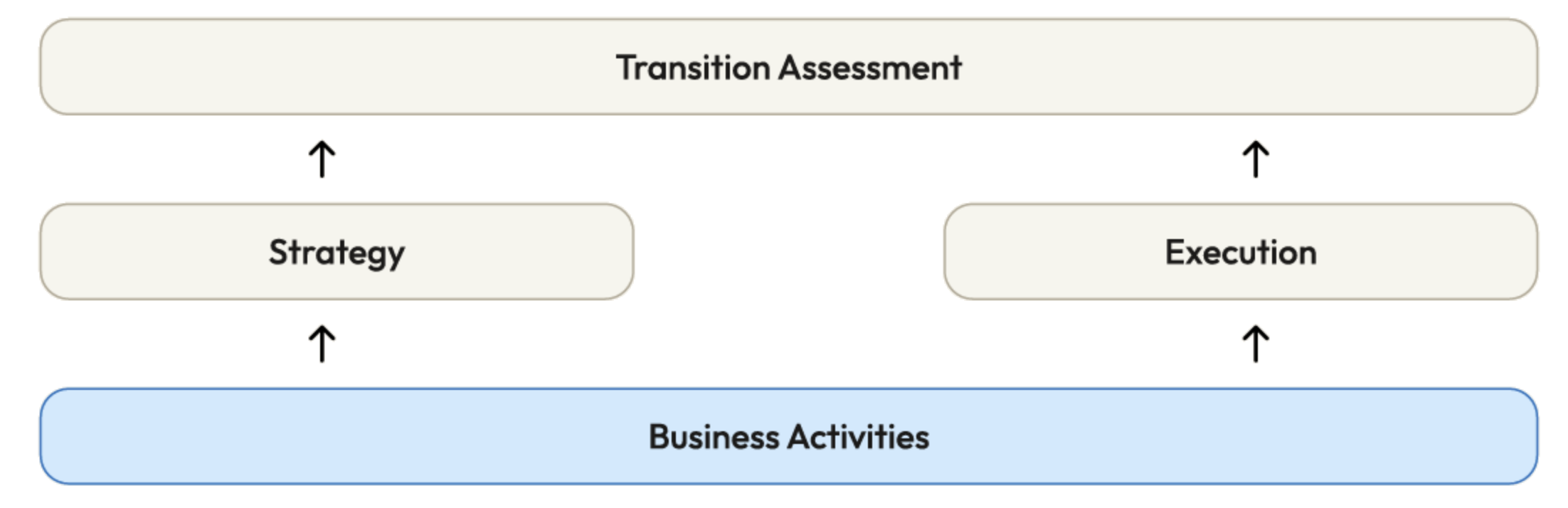
Our transition assessment framework is built around two dimensions: strategy and execution (see Figure 1 below).
Strategy is about direction. How does management understand the changing business environment? Which transition-related pressures and openings do they recognize? Is there a financially prudent approach to how the company can sustain or improve its position?
Execution is about delivery. Does the company have the capabilities, resources and follow-through to turn that direction into business results? Are investment decisions visible? Has the company taken credible steps towards an ROI?
We evaluate companies on these two dimensions because, on longer time horizons, they point to different facets of a company’s position. A company may articulate a plausible direction, but lack the capabilities to carry it out. Another company may have useful assets and operating strengths, but limited strategic clarity about how those strengths fit a changing market. Those are different situations, and investors should treat them differently.
Climate Intelligence Is Anchored in a Company’s Unique Business Context
Economic trends related to greenhouse gases (e.g., electrification, energy efficiency and commodity crop consumption) impact each company differently. Companies internalize costs and opportunities through business activities that touch on sourcing, industrial processes, logistics, product design and buyer needs.
Our framework therefore assesses transition exposure at the business-activity level, helping investors identify where the financial exposure is highest. Two companies may face similar sector pressures, yet their exposure may be concentrated in very different parts of the business, with different implications for costs, assets, demand and capital allocation.
Figure 1. Visual Representation of Transition Assessment Model
Research Built for Investment Use
Investors can use Climate Intelligence across multiple investment workflows.
Investment analysts may want to move from broad sector themes to a more granular company outlook. Looking through the lens of underlying business activities also makes it easier to compare firms exposed to the same systemic transition forces, even where those forces show up differently across companies. The distinction between strategy and execution sharpens analysis of how a company’s decisions are likely to influence future margins or capital spending requirements. For investors, this makes the research more usable in core analytical work, whether the task is integrating transition-related signals into valuation models, comparing peers, or building thematic strategies around areas of structural transition.
For an engagement team, the same structure focuses attention on the questions most likely to matter. It can clarify whether the more useful conversation is about strategic direction, governance, capital discipline or delivery against stated priorities. It can also move engagement beyond general disclosure requests toward questions tied to the company’s actual business mix and management choices. By connecting to the situational context as perceived by management, investors can more meaningfully drive change in line with their investment goals.
Creating this level of depth at a scale that is useful for investors with broad portfolios requires a controlled research process. We use AI in a transparent, human-centric structure: analysts define the framework, logic, and evidence requirements, and task-specific AI agents work within tightly defined roles. Cross-checks and analyst review throughout the process help produce research that is reliable and comparable.
Investment Research for a Transitioning Economy
As transition conditions become more consequential, investors need better research on how companies are likely to respond, and which are better or worse positioned as economic forces reshape the global economy.
Climate transition is no longer a separate layer of interpretation. It is disciplined judgement about risk and opportunity, value creation and long-term positioning. By combining business activity-level views of transition exposure with a framework grounded in strategy and execution, Climate Intelligence produces research investors can use across investment and engagement workflows.
Notes and References
1 Climate Intelligence focuses on transition risks and opportunities (arising from changes in policy, technology, markets, and input costs) rather than physical risks (which relate to the direct impacts of climate change such as extreme weather or long-term environmental shifts). Physical risks are considered indirectly where relevant. While both are material, transition dynamics are more likely to influence financial outcomes on our analysis time horizon (i.e., 5–7 years).
2 Moldovan, E. and Timmer, D. "Translating Climate Science Into Investment Decisions." Glass Lewis. December 2, 2025. https://www.glasslewis.com/article/translating-climate-science-into-investment-decisions
3 Moldovan, E. and Timmer, D. "The Climate Intelligence Landscape: Current Limitations and the Road to Improved Financial Signals." Glass Lewis. January 7, 2026. https://www.glasslewis.com/article/climate-intelligence-landscape-current-limitations-road-improved-financial-signals
4 Moldovan, E. and Timmer, D. "Climate Investing Redefined: Strategy and Execution as the New Lens to Understand Business Reality." Glass Lewis. March 24, 2026. https://www.glasslewis.com/article/climate-investing-redefined-strategy-execution-new-lens-understand-business-reality
5 Brutian, A. and Beigi, K. AI and the Fiduciary Test A Guide for Institutional Investors in Evaluating AI Proxy Voting Solutions. Glass Lewis. April 4, 2026. https://www.glasslewis.com/ai/fiduciary-test




.jpg)