

Key Takeaways
- Hybrid stewardship models are now the norm: Nearly two-thirds (65%) of respondents combine baseline portfolio expectations with deeper engagement on select holdings.
- Integration is a work in progress: While 88% report some integration between voting and engagement, a significant share of organizations still operate with fragmented workflows. Nearly half (49%) rely on spreadsheets or general-purpose tools to track engagement.
- Data and accountability as key enablers: Investors highlighted stronger feedback loops with investment teams (44%), credible escalation strategies (41%), and improved data management (36%) as priorities for improved stewardship.
- Regional differences in priorities: European investors place greater emphasis on sustainability themes, while North American investors continue to focus more on traditional governance issues.
Investment stewardship is evolving as greater team coordination, diverging regional priorities, and rising expectations for measurable outcomes reshape the landscape. To better understand how institutional investors are responding, Glass Lewis conducted its inaugural Investment Stewardship Survey last fall.
Based on responses from institutional investors globally representing trillions of dollars in assets under management, the findings highlight how stewardship has become an established and increasingly sophisticated discipline, with investors focusing on strengthening integration, prioritization, and accountability across their stewardship activities.
Who We Surveyed
The survey was conducted in Q4 2025 with institutional investors, spanning ~60 asset managers and asset owners across Europe (49%), North America (44%), and APAC (7%). Participants represent a range of firm sizes, investment approaches, and stewardship structures, offering insight into how stewardship is being executed across the market.
Key Findings at a Glance
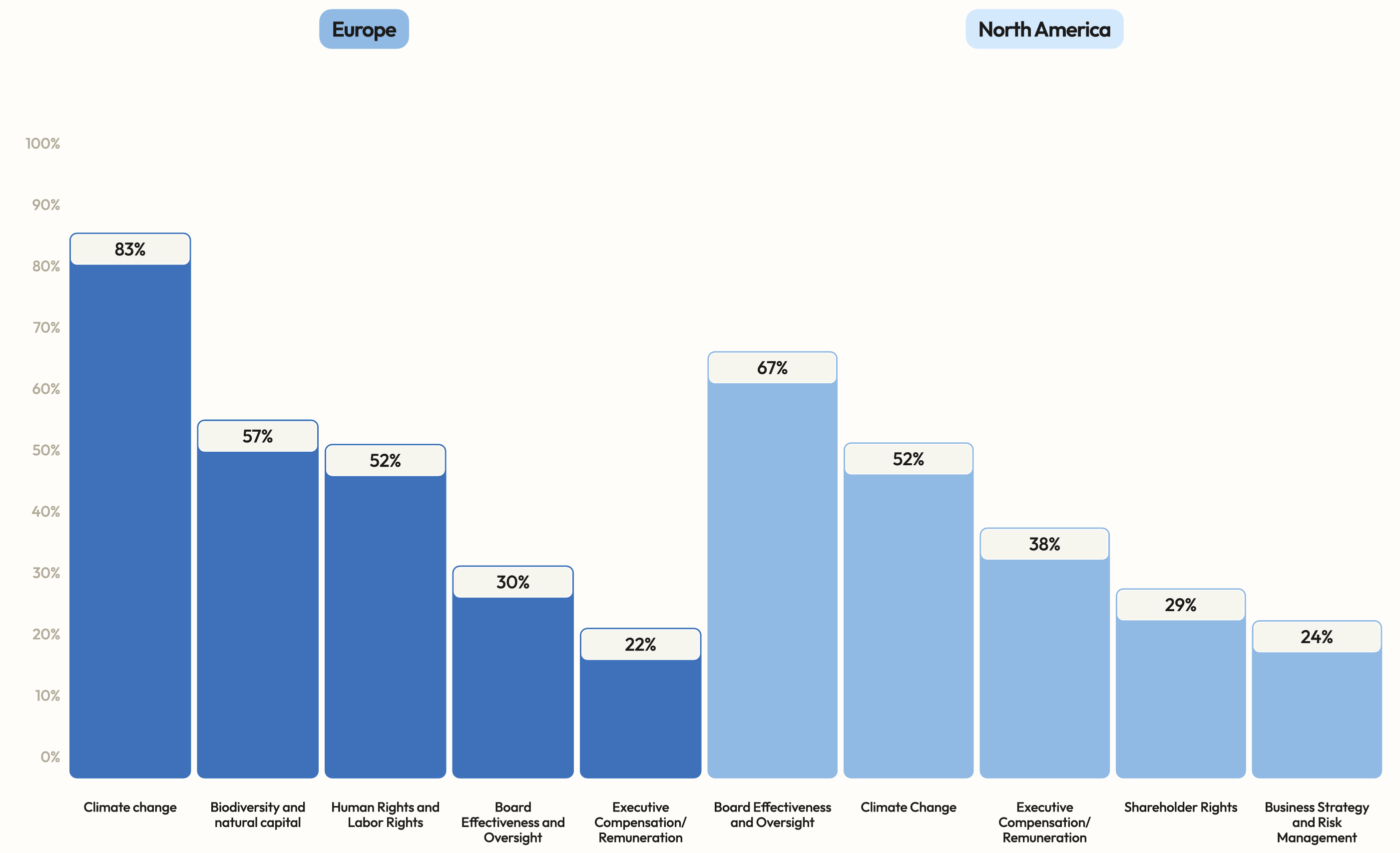
Engagement Priorities Converge on Climate and Governance, but Diverge by Region
Engagement activity focuses on climate change and board effectiveness & oversight, reinforcing their central role in stewardship agendas. At the same time, in line with broader market trends, regional differences emerge with European investors placing relatively greater emphasis on sustainability topics, while North American investors focus more on traditional governance issues.
Hybrid Stewardship Is the Norm, But It Increases Operational Complexity
With most respondents diversified across hundreds or thousands of assets, a majority describe a hybrid approach to stewardship; combining baseline market expectations for many holdings with deeper focus on a subset of engagement targets.

This requires significant effort to analyze holdings, set stewardship priorities, and track and report on progress, prompting an introspection of capabilities to empower operational success in these areas.
Investors Seek to Strengthen Stewardship via Accountability and Investment Integration
To strengthen the effectiveness of investment stewardship, many investors emphasize deeper integration with investment decision-making and the use of credible escalation. While both are widely viewed as high-impact strategies, broader industry research suggests that these approaches are not yet being implemented consistently or at scale, highlighting potential challenges in translating strategic intent into operational practice.

Investors Are Integrating Engagement and Voting, but Many Still Run Stewardship Ops on Spreadsheets
The vast majority of respondents say engagement and voting are either integrated or somewhat integrated, and three-quarters rate streamlining this as a medium to high priority. At the same time, engagement tracking is still mostly managed in siloed spreadsheets/general-purpose tools; if integration is the goal, then the operational model will need updating.1

Asset Owners Want Greater Oversight of Outsourced Stewardship, but Data Plumbing Is the Bottleneck
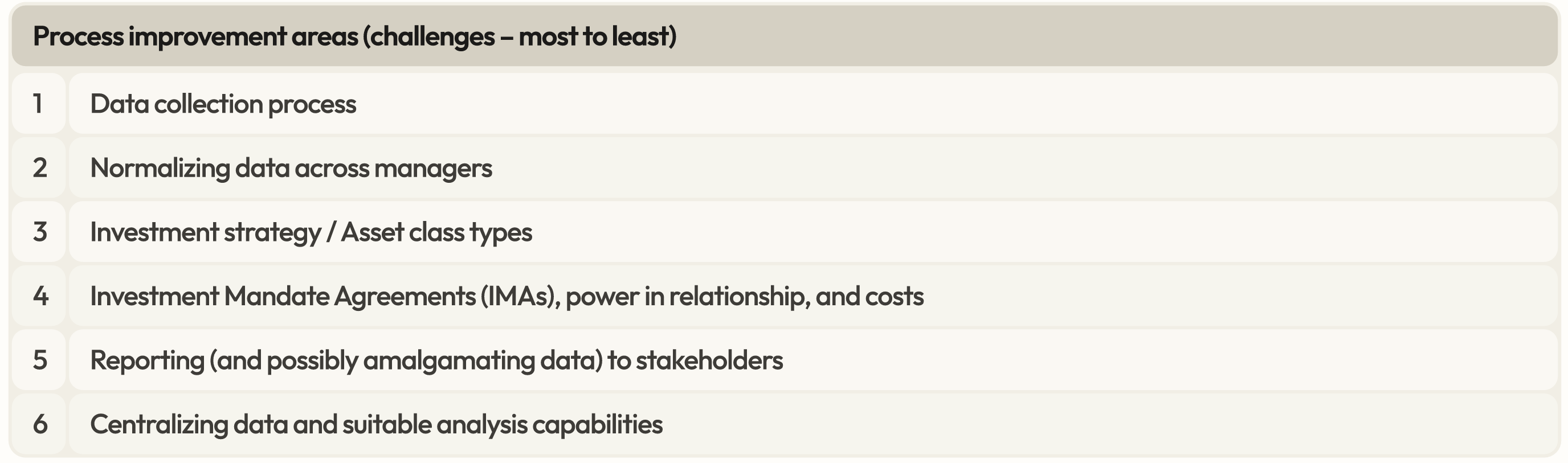
Among asset owners with external management, a clear majority express interest in monitoring and reporting on stewardship performed on their behalf. When they try to operationalize this, the top ranked challenges are data collection and normalizing data across managers. Demand for oversight is evidently there; the constraint is interoperability and standardization.
Download the full stewardship survey report. Explore the full results, including segmented insights by investor type, region, assets under management, and team structure.
.jpg)
Notes and References
1 This table highlights results based on question alternatives from three separate questions.