ARTIFICIAL INTELLIGENCE EXPLAINER · FOR INSTITUTIONAL INVESTORS

The Foundation Matters More Than the Model

“The future will not be defined solely by the sophistication of AI models or the elegance of software interfaces. It will be defined by the quality of the data that powers those systems, the expertise that governs them, and the accountability that ensures their outputs can be trusted.”

— The Foundation Matters More Than the Model · Page 3

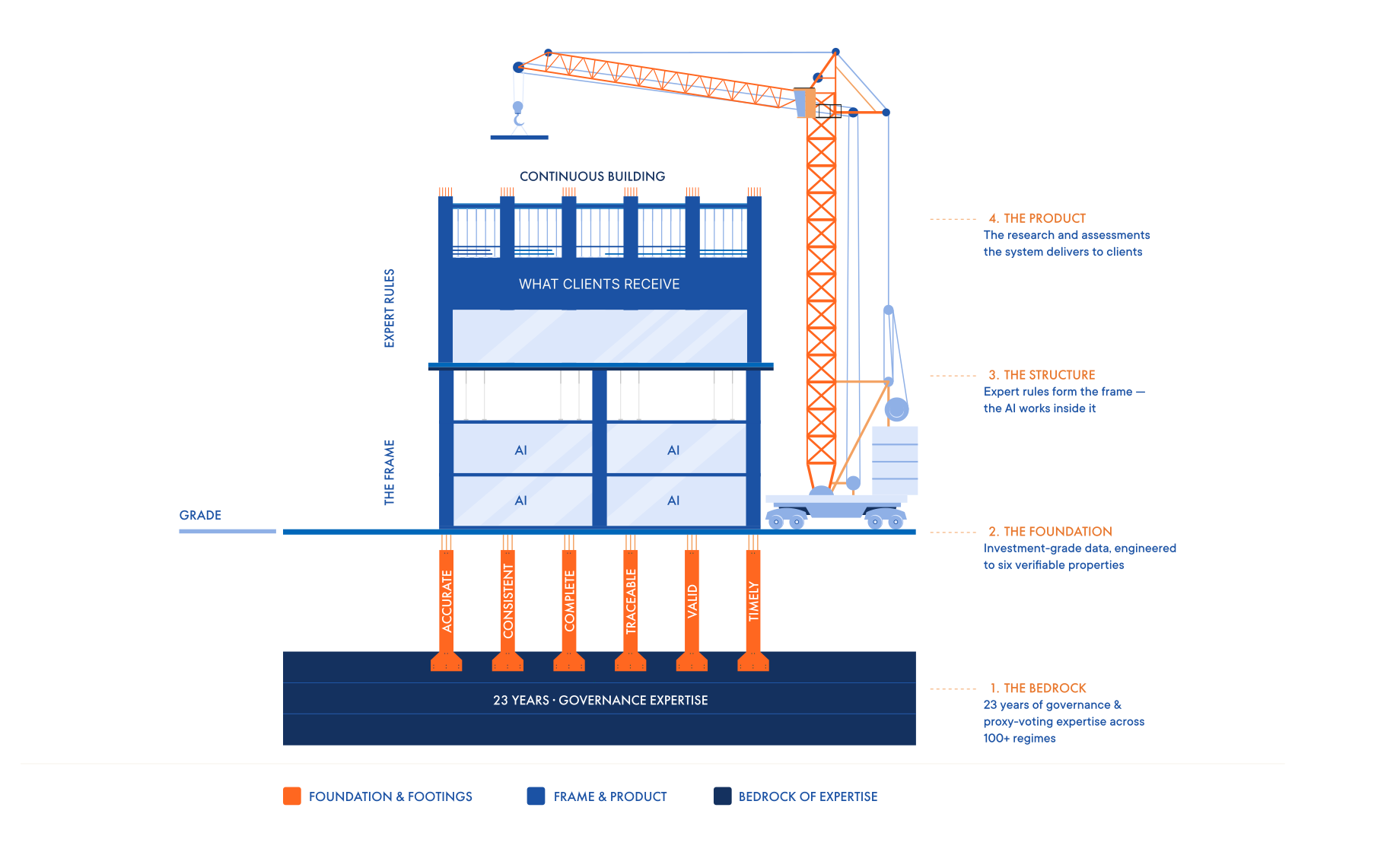
This explainer borrows the language of construction — foundations, blueprints, load paths — to describe Glass Lewis’s approach to artificial intelligence in governance, stewardship, and proxy voting. These concepts are the clearest way to show how a system like this is actually put together.
What Holds an AI System Up

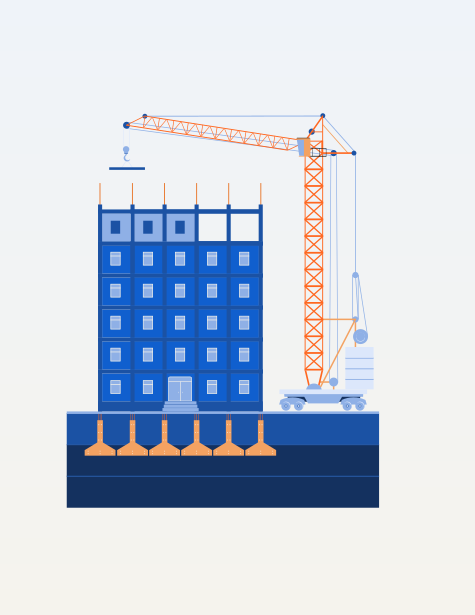
What holds a building up
is what you don’t see.
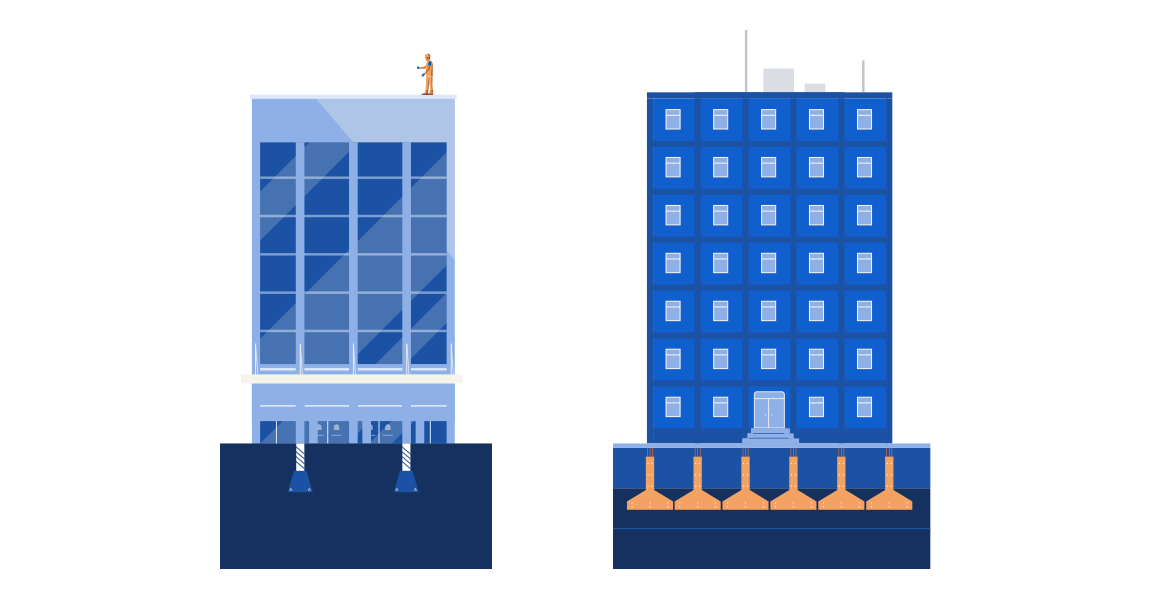
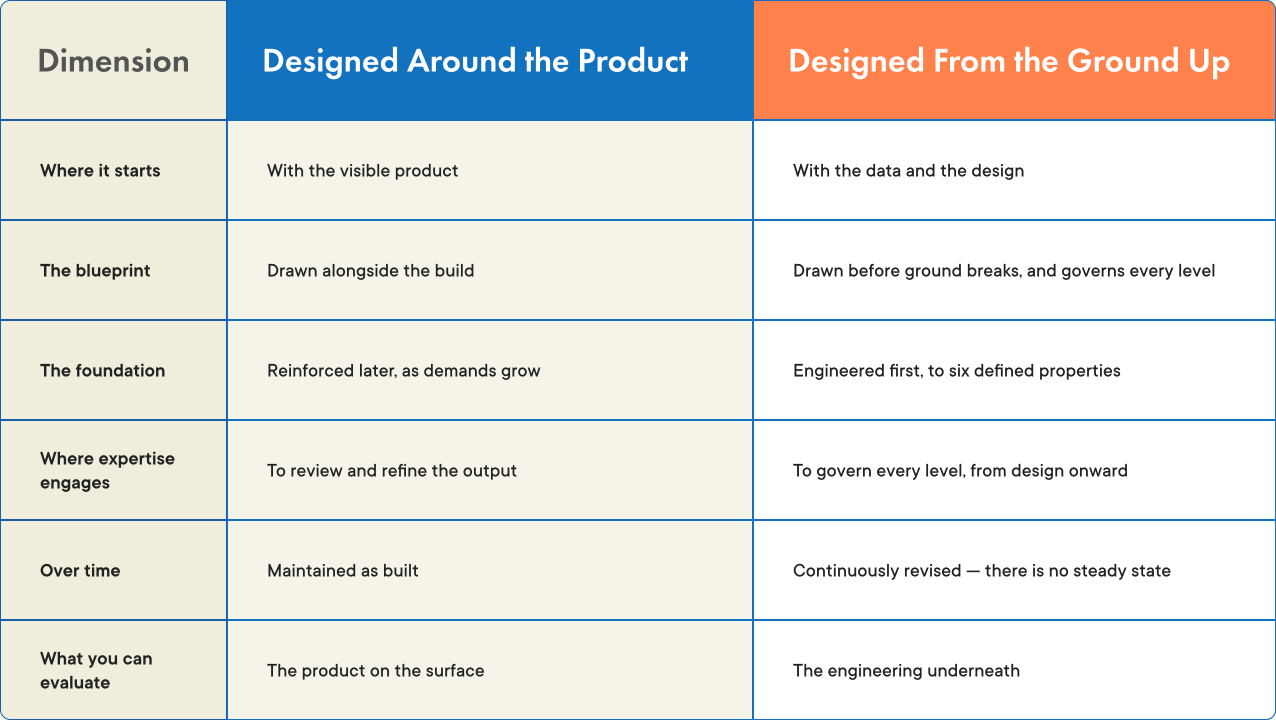
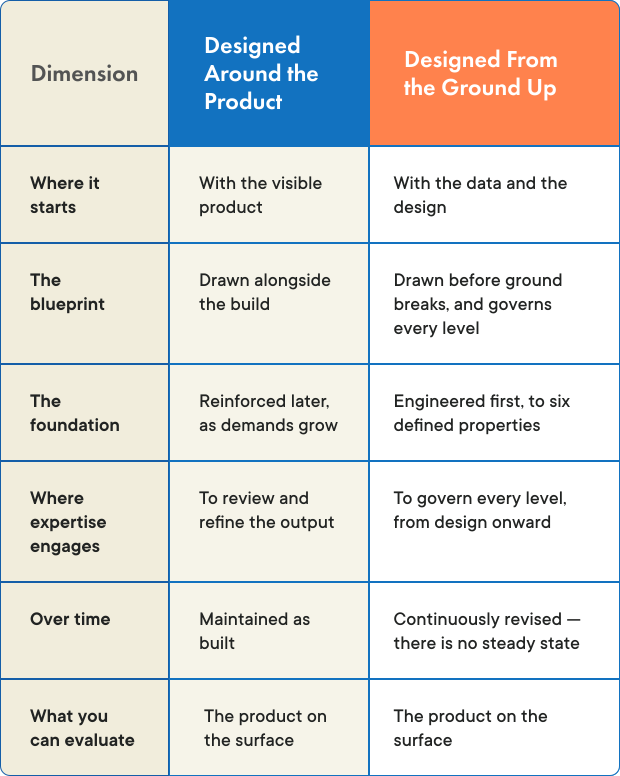
Powerful large language models are now widely available. What sets one AI system apart from another is everything beneath the surface — the data it rests on, the methodology that shapes it, and the expertise behind both. There are two ways an AI system can be designed.
Product-led AI

Designed Around the Product

The visible product is designed first
Data and supports are fitted to its needs
Expertise reviews the output
Foundation-led AI

Designed From the Ground Up

The blueprint and foundation come first
Grounded in governance expertise
Expertise governs every level, from design onward
When markets repriced in early 2026, the companies whose value rested on proprietary data and governed architecture held up best.

The Foundation Matters More Than the Model · Pages 6–7

The Blueprint

Before you pour a foundation,
you draw a blueprint.

In a governed AI system, methodology is the blueprint. It determines what data matters, how it’s structured, what the AI is permitted to conclude, and how every output must be justified — before anything is built.

The Methodologist as Building Architect

A methodologist used to write the research policy, then hand the building to others. The role has grown well beyond that.


Working alongside AI architects, methodologists now help shape the structure of the system itself — the reasoning rules, the choice of which AI tool does which job, and the guardrails the models operate inside. The blueprint doesn’t just describe the research. It governs the whole build.

COMING SOON

The next paper in this series goes inside the building floor by floor.

“The expertise came first. The architecture follows from it.”

AI and the Fiduciary Test · Page 26

Under the Facade

What’s Holding the Building Up

1
The Bedrock

23 Years of Expertise

Knowing what to build comes first. The bedrock is more than two decades of governance and proxy-voting research — knowing which data points are material across more than 100 regulatory regimes and 40 languages.


That knowledge is what tells you how to lay the foundation, draw the blueprint, and frame the structure. The expertise came first. Everything else is built on it.
2
The Foundation

Investment-Grade Data

The data is engineered to six properties, each verifiable on the data itself — the footings driven into the bedrock. Two further properties govern how it’s held up in production.
01

Accurate

Validated against source evidence
02

Consistent

Normalized under clear rules across markets
03

Complete

Coverage gaps identified and managed
04

Traceable

Linked to source, end to end
05

Valid

Conforms to defined formats and logic checks
06

Timely

Updated fast enough for decision cycles
+

Secure

Protected through appropriate access controls
+

Observable

Monitored for drift and anomalies across its whole life

The Foundation Matters More Than the Model · Pages 9–10

3
The Structure

Rules First, Then AI

A building’s frame doesn’t hold the weight on its own — it gathers the load of every floor and carries it down into the foundation, which passes it into the bedrock. Here, the frame is a set of expert rules: what the AI may do, how it must reason, and where it must stop.


The AI models work inside that frame. They read disclosure, find patterns, and draft analysis — and everything they produce travels that same load path, resting on the data foundation and, beneath it, the expertise. Pairing fixed rules with flexible AI this way is known as a neuro-symbolic design.
4
The Product

What Clients Receive

At the top is what clients actually receive: expert analysis and recommendations they can act on and defend. It is the visible floor of the building — but it stands on everything beneath it.


Because every level below is governed, the product is more than an output. Each conclusion can be traced back down through the expert rules to the specific evidence that supports it — analysis a stewardship team can put in front of a board, a client, or a regulator.
A Live Example

One System We’ve Built This Way

Glass Lewis Climate Intelligence is research that helps investors evaluate how companies' transition strategy and execution drive long-term value.

It’s built exactly as this page describes: expert-defined data as the foundation, methodology as the blueprint, expert rules framing the AI, and human oversight at every level. Our next paper takes you inside it, floor by floor.
Send it to me on release
The Maintenance and Management

Construction ends. The engineering doesn’t.

Once a building opens, it is inspected, maintained, and re-engineered for as long as it stands. That’s what keeps it safe to occupy. The same discipline applies here. Markets move, disclosure regimes change, and models drift, so three levels of human oversight keep the system sound, long after launch.
Output Level · Human-in-the-Loop

Inspect Each Floor

Analysts review individual high-stakes assessments against the methodology, the source evidence, and the AI’s reasoning chain.
Process Level · Human-on-the-Loop

Monitor the Whole Building

Specialists watch the full system for drift and unusual patterns, recalibrating before anything reaches a client.
Architecture Level · Human-in-Command

Revise the Design

Methodologists retain the authority to restructure or evolve the design when it’s no longer fit for purpose.
"Three levels of oversight, operating at once."

AI and the Fiduciary Test · Page 25

Two Approaches, Side by Side

Two approaches. Different engineering.

“Advantage will not be determined by who builds the fastest models, but by who controls the most trusted data — and who can deploy it with the discipline required for institutional decision-making.”

The Foundation Matters More Than the Model · Page 13