ARTIFICIAL INTELLIGENCE EXPLAINER · FOR INSTITUTIONAL INVESTORS

Comparing Two Approaches to AI in Proxy Voting

What the human-in-the-loop label hides:

The phrase human-in-the-loop ... encompasses a wide range of implementations, from systems where human expertise governs the production process to systems where human review is applied to AI outputs after the fact. Understanding the operational difference between these implementations is the most important analytical task for any asset manager evaluating AI proxy voting solutions.

— AI AND THE FIDUCIARY TEST, PAGE 13

A
APPROACH A

The AI-First Pipeline:
Human Review at the Output Stage

AI handles production.
Humans check the output.

A horizontal flow with a single human checkpoint at the end.

How it works

AI handles the production of governance research and voting recommendations from source data through to output.
Three sequential machine stages produce the recommendation. A human reviews what the system has generated.
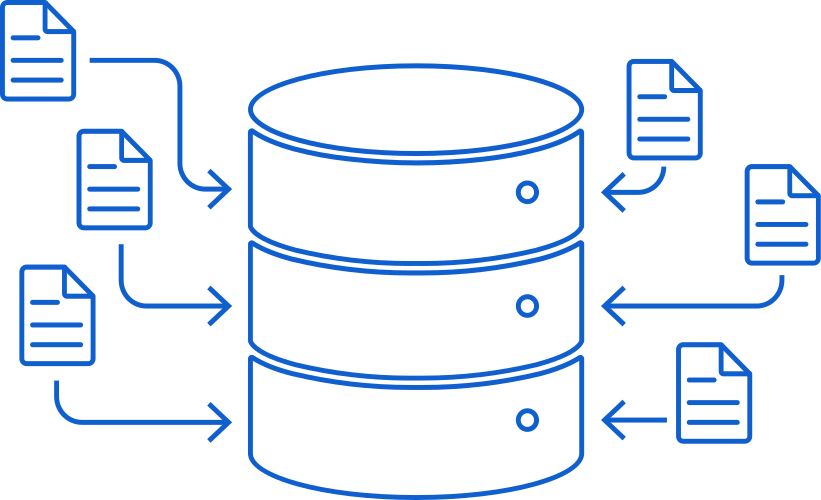
01 • AI stage

Data Extraction

Machine learning extracts data from regulatory filings.
Arrow right
02 • AI stage

Rule Application

Policy rules applied algorithmically to generate voting instructions.
Arrow right
03 • AI stage

Recommendation Output

System produces voting recommendations at portfolio scale.
Arrow right
04 • Human checkpoint

Human Review

Analyst checks outputs for
errors and policy alignment.

What it does well · What to watch for

Approach Breakdown

AI handles production from source data through to output.
Arrow down
Data is extracted from regulatory filings using machine learning.
Arrow down
Policy rules are applied algorithmically to generate voting instructions.
Arrow down
Human analysts review outputs to check for obvious errors, flag edge cases, and confirm that recommendations align with the client's stated policy.
Arrow right

Approach Capabilities

Can process thousands of shareholder meetings faster than manual research allows.
Can apply policy consistently across large portfolios.
Can identify potentially contentious votes before they require deeper analysis.
For asset managers focused primarily on operational efficiency in routine voting situations, these are meaningful benefits.
Arrow right

Drawbacks of Approach

Humans are positioned at the output stage. Their role is to evaluate what the AI has produced.
The methodology governing what the AI is permitted to conclude was designed as a largely technical exercise.
The data feeding the model reflects what was extractable from source documents, not what a governance expert would specify as the relevant inputs.
Human analysts review outputs to check for obvious errors, flag edge cases, and confirm alignment with the client's stated policy.
B
APPROACH B

The Expertise-Governed Architecture:
Human Review at Three Levels

Expertise governs the system.
AI operates inside it.

A layered system with human judgment threaded through three levels.

How it works

A methodology framework, designed by analysts with years of market coverage, sits above the AI. The AI operates inside that framework. Human review is embedded at defined checkpoints, not appended to the output.
PRODUCTION  ARCHITECTURE · APPROACH B

Methodology Framework

Data models, normalization rules, and decision rules designed by governance domain experts before the AI is applied.
EXPERT LAYER
01 • AI

Document Acquisition

Inside the framework's schema.
02 • AI

Data Normalization

Per analyst-defined rules.
03 • AI

Scenario Mapping

Bounded by expert rules.
04 • AI LANE

Recommendation

With source traceability.
ARCHITECTURE LEVEL
1

Fit-for-Purpose Authority

Methodologists assess whether the AI approach is fit for purpose, and retain authority to modify or halt it.
PROCESS LEVEL
2

Stream Monitoring and Recalibration

Analysts monitor streams of outputs for anomalies and recalibrate the system when patterns fall outside expected parameters.
OUTPUT LEVEL
3

Glass Lewis Governance Solutions

User-friendly governance platform for accessing research, recommendations, resources, tools, and engagement letters.

What it does well · What to watch for

Approach Breakdown

Bullet orange
AI operates inside a methodology framework built by governance domain experts before the AI was applied.
Bullet orange
The data models defining which data points are relevant, how they are normalized across markets, and how they map to specific governance scenarios were designed by analysts who have spent years covering these markets.
Bullet orange
The rules governing what the AI is permitted to conclude were developed from accumulated institutional knowledge by experts and methodologists, and embedded into the AI architecture by design.
Bullet orange
Human review is embedded in the AI-powered production process at defined decision checkpoints, not appended to the output.

Benefits of Approach

Bullet orange
The analyst's expertise governs the system's behavior before a single output is generated.
Bullet orange
Output level: high-stakes findings require analyst review before reaching clients.
Bullet orange
Process level: analysts monitor streams of outputs for anomalies and recalibrate the system when patterns fall outside expected parameters.
Bullet orange
Architecture level: methodologists assess whether a given AI approach is fit for its purpose and retain the authority to modify or halt it if it is not.
Together these levels ensure that human expertise governs not just what the AI concludes, but how and whether it operates.

What to Watch For

Bullet orange
Requires upfront investment in analyst expertise, methodology development, and AI systems design.
Bullet orange
Depends on years of operational experience covering global governance markets to inform the methodology layer.
Bullet orange
Demands sustained discipline to keep the methodology framework current as governance practices and disclosure regimes evolve.
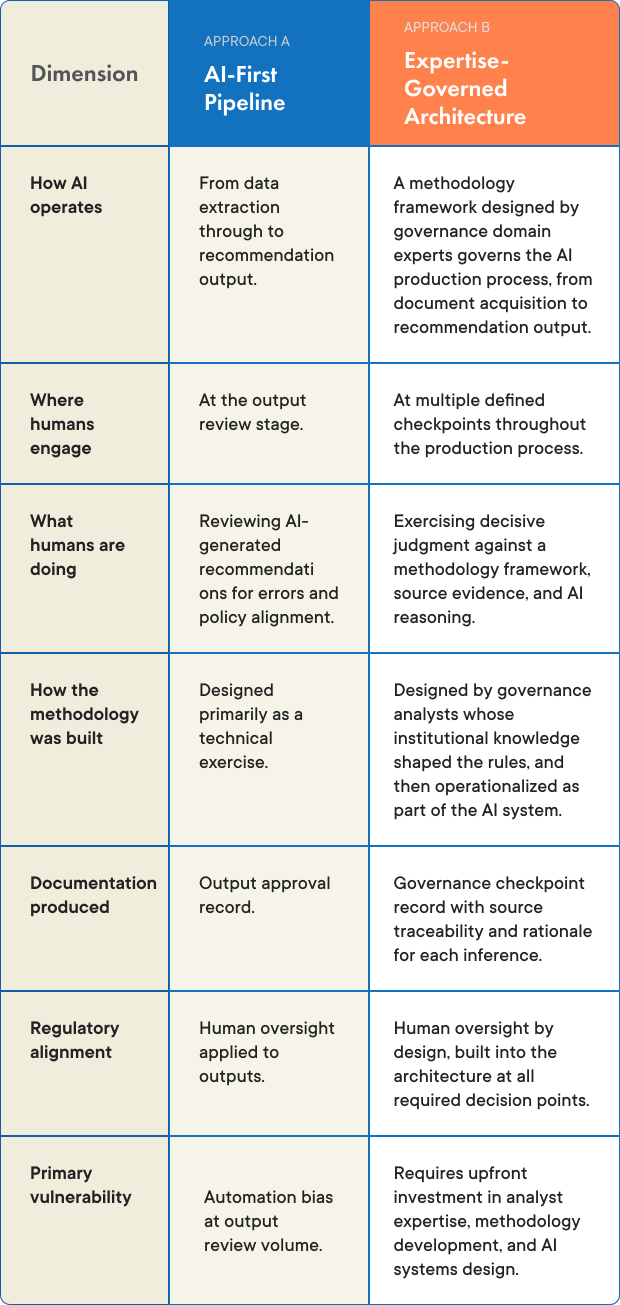
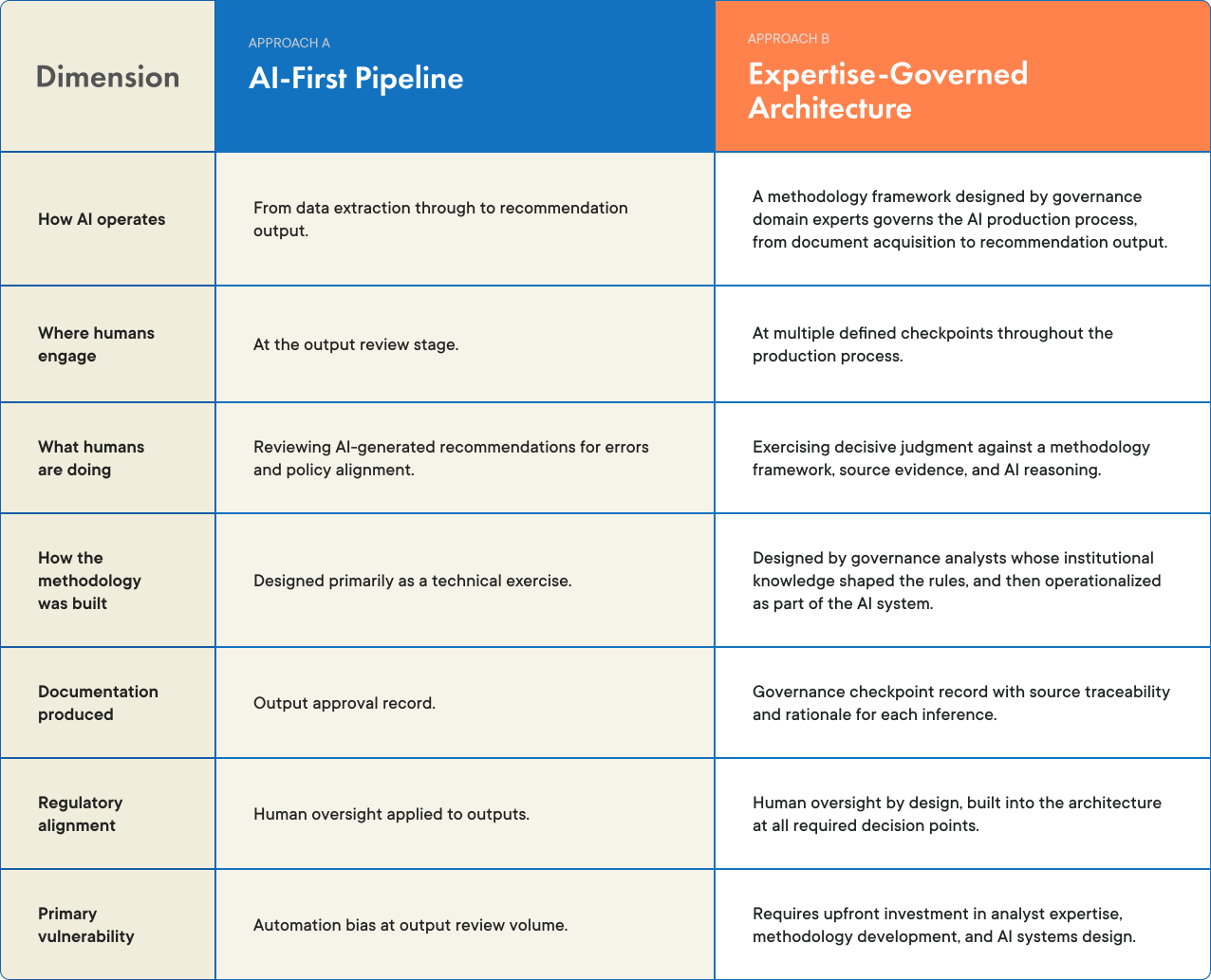
SIDE-BY-SIDE COMPARISON

The same labels. Different architectures.
THE DECISIVE DISTINCTION

"In practice, AI systems often blend elements of both approaches, and the boundary is not always visible from the outside. The decisive question is not what category a provider claims. It is where judgment actually governs the process...

The choice between these approaches is ultimately a decision about where accountability for fiduciary outcomes lives. For asset managers whose voting decisions carry legal and reputational accountability, that decision matters."

— AI AND THE FIDUCIARY TEST, PAGE 17

APPROACH A

Quality Control

Reviewing outputs after the fact.
After-the-fact judgment
APPROACH B

Fiduciary Governance

Designing the rules governing the AI.
Judgment by design
READ THE FULL WHITE PAPER

AI and the Fiduciary Test

Read AI and the Fiduciary Test